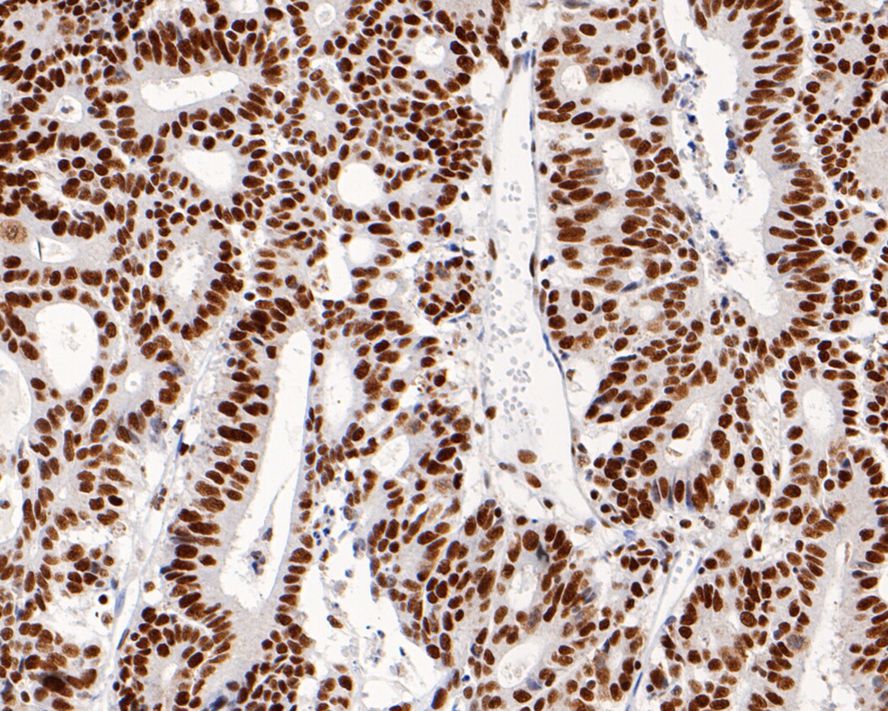
Leptin receptor (OB-R), also named B219, is a type I cytokine receptor family protein with significant amino acid sequence identity with gp130, G-CSF receptor, and the LIF receptor. Multiple isoforms of human and mouse OB-R, including a long form (OB-RL) with a large cytoplasmic domain capable of signal-transduction, and several receptor isoforms with short cytoplasmic domains (OB-Rs) lacking signal-transducing capabilities, have been identified. The extracellular domains of the short and long forms of OB-R are identical. An OB-R transcript lacking a transmembrane domain and potentially encoding a soluble form of the receptor has also been described. Circulating soluble OB-R, complexed to leptin, has been detected in mouse serum. Serum soluble OB-R levels have been shown to increase during pregnancy. OB-RL transcripts were reported to be expressed predominantly in regions of the hypothalamus previously thought to be important in body weight regulation. Expression of OB-Rs transcripts have been found in multiple tissues, including the choroid plexus, lung, kidney and primitive hematopoietic cell populations. OB-R has recently been shown to be encoded by the mouse diabetes (db) and rat fatty (fa) genes. Rodents homozygous for the db or fa mutations have been known to exhibit an obesity phenotype.Mouse OB-R long form encodes a 1162 amino acid (aa) residue precursor protein with a 22 aa residue signal peptide, an 817 aa residue extracellular domain, a 21 aa residue transmembrane domain, and a 302 aa residue cytoplasmic domain. The extracellular domain of OB-R contains two hemopoietin receptor domains, a fibronectin type III domain and the WSXWS domain. Recombinant murine soluble OB-R has been shown to bind leptin with high affinity and is a potent leptin antagonist.
Leptin receptor (OB-R), also named B219, is a type I cytokine receptor family protein with significant amino acid sequence identity with gp130, G-CSF receptor, and the LIF receptor. Multiple isoforms of human and mouse OB-R, including a long form (OB-RL) with a large cytoplasmic domain capable of signal-transduction, and several receptor isoforms with short cytoplasmic domains (OB-Rs) lacking signal-transducing capabilities, have been identified. The extracellular domains of the short and long forms of OB-R are identical. An OB-R transcript lacking a transmembrane domain and potentially encoding a soluble form of the receptor has also been described. Circulating soluble OB-R, complexed to leptin, has been detected in mouse serum. Serum soluble OB-R levels have been shown to increase during pregnancy. OB-RL transcripts were reported to be expressed predominantly in regions of the hypothalamus previously thought to be important in body weight regulation. Expression of OB-Rs transcripts have been found in multiple tissues, including the choroid plexus, lung, kidney and primitive hematopoietic cell populations. OB-R has recently been shown to be encoded by the mouse diabetes (db) and rat fatty (fa) genes. Rodents homozygous for the db or fa mutations have been known to exhibit an obesity phenotype.
Mouse OB-R long form encodes a 1162 amino acid (aa) residue precursor protein with a 22 aa residue signal peptide, an 817 aa residue extracellular domain, a 21 aa residue transmembrane domain, and a 302 aa residue cytoplasmic domain. The extracellular domain of OB-R contains two hemopoietin receptor domains, a fibronectin type III domain and the WSXWS domain. Recombinant murine soluble OB-R has been shown to bind leptin with high affinity and is a potent leptin antagonist.
Overview
Standard Curve Range
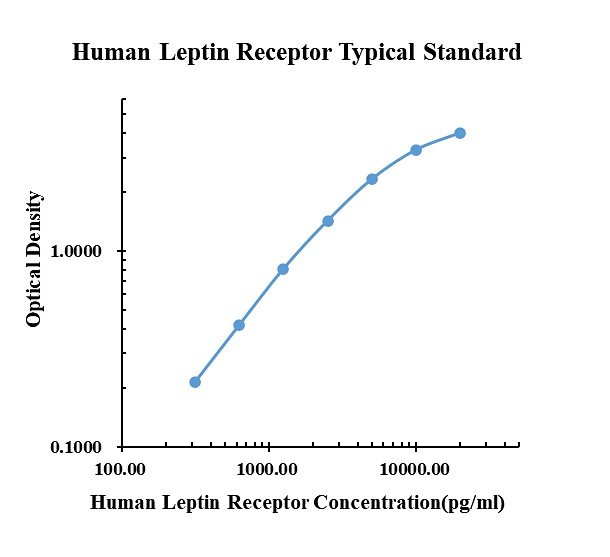
312.5 pg/ml -20000 pg/ml
Standard Curve Gradient
7 Points/3 Folds
Number of Incubations
2
Detectable Sample
Not specified
Sample Volume
50 μl
Type
Not Ready-to-Use
Operation Duration
120min
Alternative Names
Endospanin-1, Leptin receptor overlapping transcript protein, OB-R gene-related protein
Gene Symbol
LEPROT, LEPR, OBR
Entrez Gene
54741 (Human)
SwissProt
O15243 (Human)
*AREX continuously optimizes our products. Webpage content may not reflect the latest updates. For inquiries, please contact info@arexbio.com or your local distributor.
• Optimized capture and detection antibody pairings with recommended concentrations save lengthy development time • Development protocols are provided to guide further assay optimization • Assay can be customized to your specific needs • Economical alternative to complete kits
Kit Content
• Capture Antibody • Detection Antibody • Recombinant Standard • Streptavidin conjugated to horseradish-peroxidase (Streptavidin-HRP)
Store components at 4°C or -20°C. Keep microplate wells sealed in a dry bag with desiccants. Do not expose test reagents to heat, sun or strong light during storage and usage. Please refer to the product user manual for detail temperatures of the components.
Note
For Research Use Only. Not for diagnostic, therapeutics, prophylactic or in vivo use.
The ARExSet® antibody pair for ELISA is a Do-It-Yourself (DIY) ELISA reagent set containing optimized capture and detection antibody pairs, recombinant standard, and Streptavidin-HRP. It is designed for researchers who need flexibility in developing their own sandwich ELISA assays.
What sample types can be used with the ARExSet® antibody pair?
Suitable samples typically include serum, plasma, cell culture supernatant, tissue grinding liquid, and other liquid phase samples of soluble substances.
How should the ARExSet® antibody pair be stored?
Store components at 4°C or -20°C upon receipt. Reconstituted standards should be used immediately or stored at -20°C. Avoid repeated freeze/thaw cycles.
What other reagents are required to use the ARExSet® antibody pair?
The ARExSet® Ancillary Reagent Kit is required, containing 96-well microplates, plate sealers, coating buffer, blocking buffer, wash buffer, assay buffer, substrate solution, and stop solution. These can be purchased separately.
Can the assay be customized?
Yes. The assay can be customized to your specific needs. Development protocols are provided to guide further assay optimization. The optimized capture and detection antibody pairings save lengthy development time.



 Instruction

 Product Details