Puromycin Recombinant Rabbit Monoclonal Antibody(ARA482)

Key features and details

Recombinant rabbit monoclonal antibody to Puromycin
  • Target: Puromycin
  • Source/Host: Rabbit
  • Reactivity: Species independent
  • Clonality: Monoclonal
  • Applications: WB,IHC,IF/ICC,FC
  • Conjugation: Unconjugated
  • Isotype: IgG
  • Storage: at -20°C
  • Brand:
CAT.NO. : ARA5792
US$ Please choose
US$ Please choose
Size:
Trail, Bulk size or Custom requests Please contact us
Product Details
Background
Puromycin is an aminonucleoside antibiotic, derived from the Streptomyces alboniger bacterium, that causes premature chain termination during translation taking place in the ribosome. Part of the molecule resembles the 3' end of the aminoacylated tRNA. It enters the A site and transfers to the growing chain, causing the formation of a puromycylated nascent chain and premature chain release. The exact mechanism of action is unknown at this time but the 3' position contains an amide linkage instead of the normal ester linkage of tRNA. That makes the molecule much more resistant to hydrolysis and stops the ribosome.
Application
To ensure optimal assay performance, AREX recommends conducting reagent titration tailored to each testing system for optimal detection results.

Application

Dilution Ratio

WB

1:1,000 - 1:2,500

IHC

1:10,000 - 1:20,000

IF/ICC

1:2,000 - 1:5,000

FC

1 μg/mL

*Results are sample-specific. Please refer to your local assay conditions and test parameters for reference.
Overview

Description

Recombinant rabbit monoclonal antibody to Puromycin for WB, IHC, IF/ICC and FC.

Specificity

Recognizes puromycin incorporated into nascent polypeptide chains.

Antibody Type

Primary antibody,Recombinant

Molecular Weight

Observed: 14-250 kDa

Purification

Protein A affinity purification

Isotype

IgG

Form/Buffer

Liquid in PBS (pH 7.4) with 0.1% BSA, 40% glycerol and 0.2% ProClean 950.

*AREX continuously optimizes our products. Webpage content may not reflect the latest updates. For inquiries, please contact info@arexbio.com or your local distributor.
*Clone Number, Reactivity, Source/Host and Clonality can be found in the product name and Key Features section above.
Data

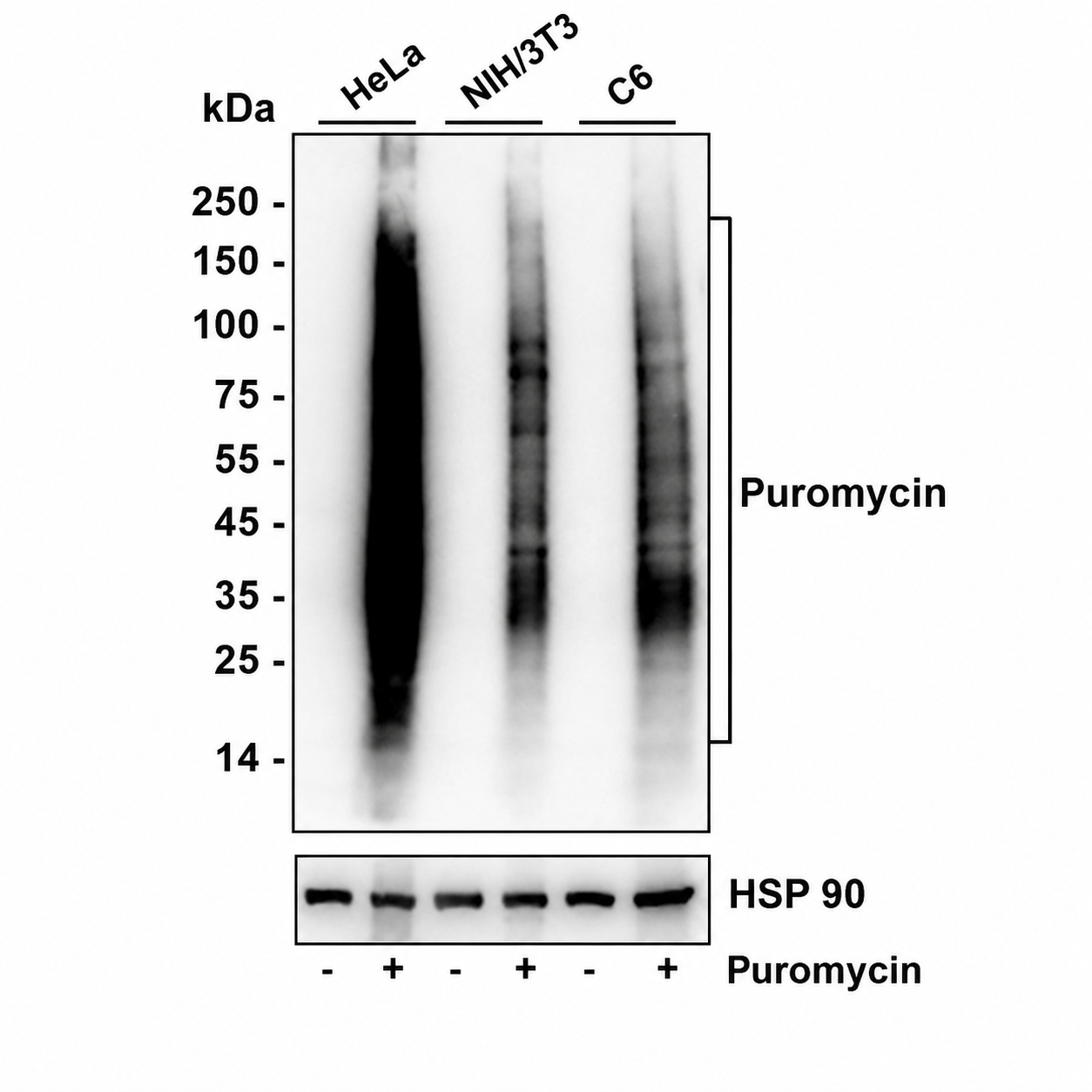
Western blot analysis of Puromycin on different lysates with Puromycin Recombinant Rabbit Monoclonal Antibody(ARA482) at 1:2,500 dilution.

Lane 1: Untreated HeLa cell lysate
Lane 2: HeLa treated with 1 μM Puromycin for 30 minutes cell lysate
Lane 3: Untreated NIH/3T3 cell lysate
Lane 4: NIH/3T3 treated with 1 μM Puromycin for 30 minutes cell lysate
Lane 5: Untreated C6 cell lysate
Lane 6: C6 treated with 1 μM Puromycin for 30 minutes cell lysate

Lysates/proteins at 10 μg/lane.
Exposure time: 46 seconds. Blocking: 5% NFDM/TBST for 1 hour at room temperature. The primary antibody at 1:2,500 dilution was used overnight at 4°C. HRP-conjugated Goat Anti-Rabbit IgG (H+L) at 1:50,000 dilution was used for 1 hour at room temperature.
Observed band size: 14-250 kDa
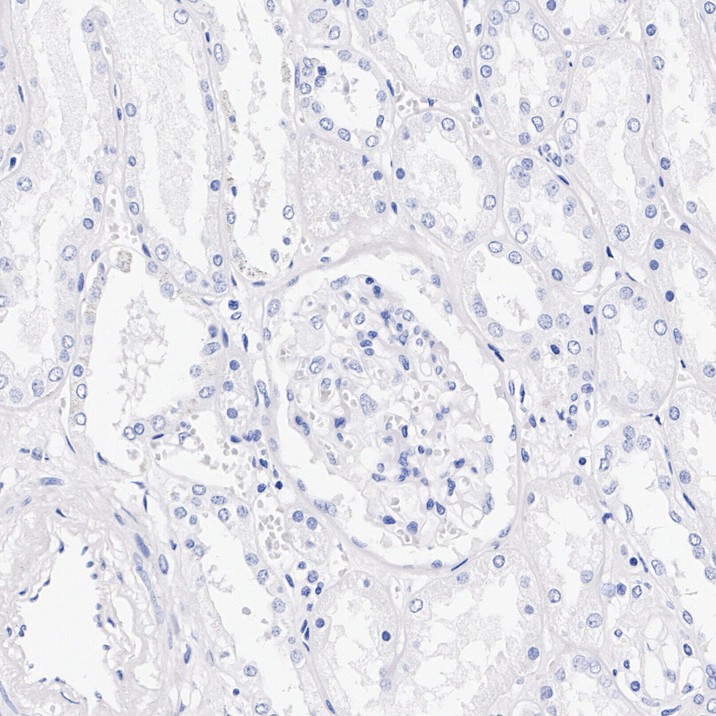
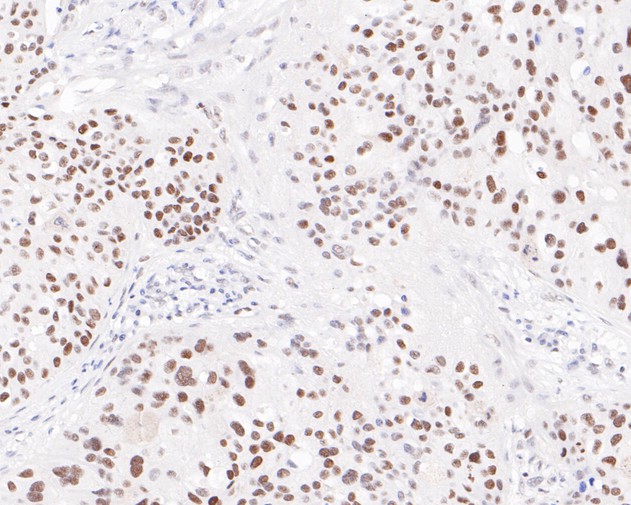
Immunohistochemical analysis of paraffin-embedded human kidney tissue (negative control) with Puromycin Recombinant Rabbit Monoclonal Antibody(ARA482) at 1:20,000 dilution.

Antigen retrieval was performed by heat mediation with Tris-EDTA buffer (pH 9.0) for 20 minutes at 95°C. Endogenous peroxidase was blocked with 3% H2O2 for 10 minutes at room temperature. The section was blocked with 1% BSA + 10% normal goat serum for 10 minutes at room temperature and then probed with the primary antibody for 1 hour at room temperature.
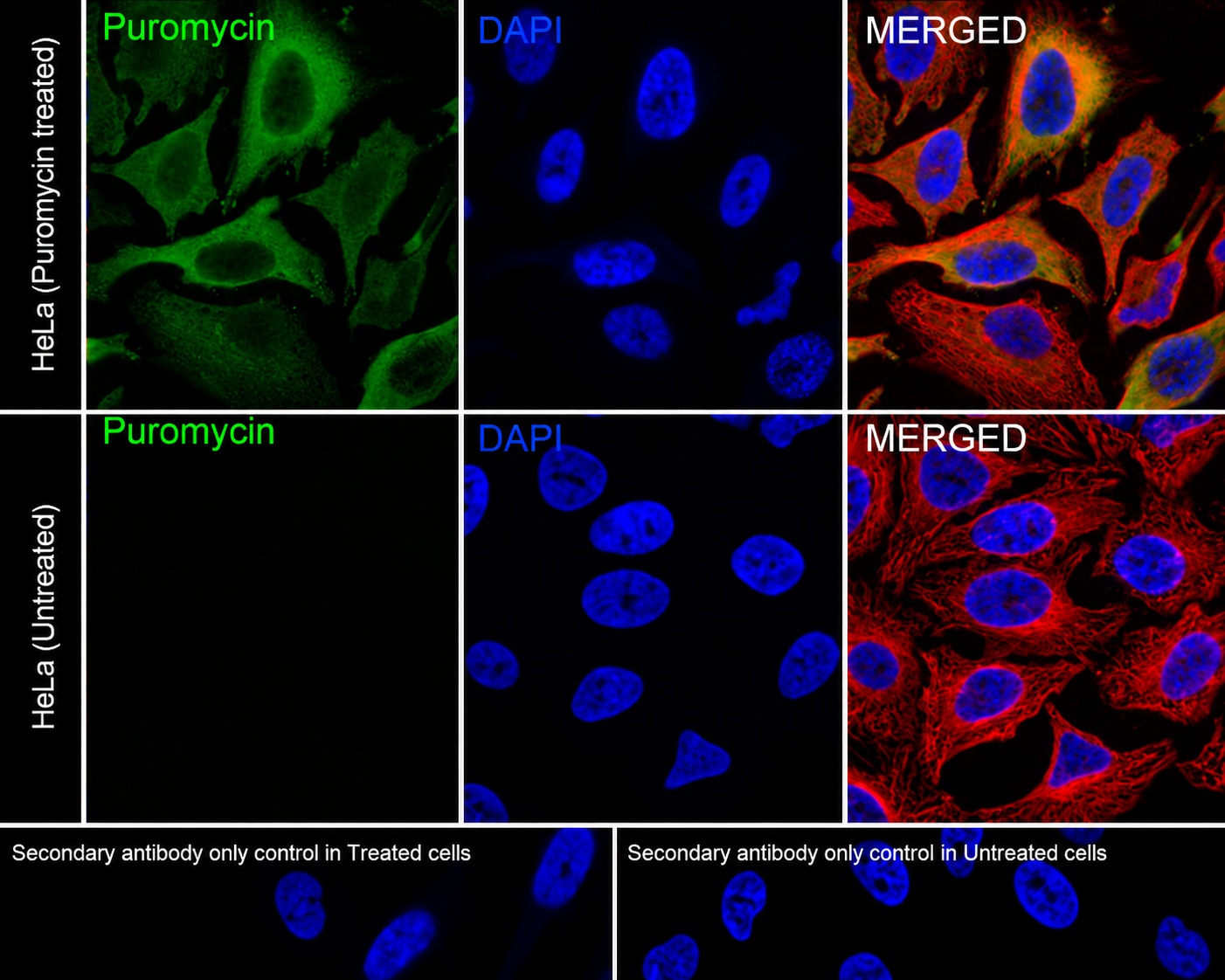
Immunofluorescent analysis of 4% PFA-fixed HeLa cells treated with 1 μM Puromycin for 30 minutes with Puromycin Recombinant Rabbit Monoclonal Antibody(ARA482) at 1:5,000 dilution.

Cells were permeabilized with 0.1% Triton X-100 for 15 minutes and blocked with 1% BSA + 10% normal goat serum for 1 hour at room temperature. The primary antibody was incubated overnight at 4°C, followed by AREX® Fluor 488-conjugated Goat Anti-Rabbit IgG (H+L) for 45 minutes at room temperature. β-tubulin was stained in red and nuclei were counterstained with DAPI (blue).
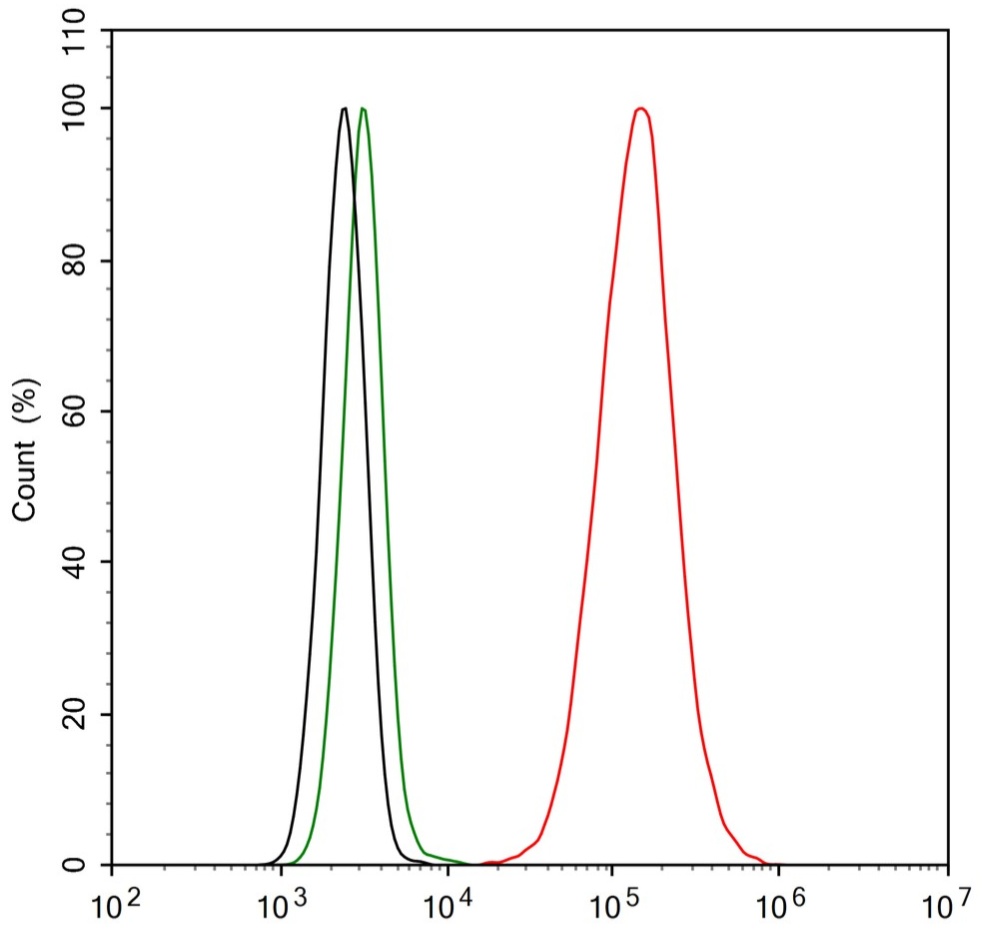
Flow cytometry (intracellular) analysis of 4% PFA-fixed HeLa cells treated with 1 μM Puromycin for 30 minutes with Puromycin Recombinant Rabbit Monoclonal Antibody(ARA482) at 1 μg/mL (red), compared with Rabbit IgG isotype control (green).

Cells were permeabilized with 90% methanol for 5 minutes and blocked with 1% BSA + 10% normal goat serum for 15 minutes at room temperature. The primary antibody was incubated for 15 minutes at room temperature, followed by AREX® Fluor 488-conjugated Goat Anti-Rabbit IgG (H+L) for 15 minutes at room temperature.

Storage
Store at 4°C short term. For long term storage, store at -20°C, avoiding freeze/thaw cycles.
Note
For Research Use Only. Not for diagnostic, therapeutics, prophylactic or in vivo use.
FAQs
What are the main types of research antibodies and how do they differ?
Research antibodies are mainly divided into monoclonal antibodies and polyclonal antibodies. Monoclonal antibodies typically offer higher specificity and better batch-to-batch consistency, while polyclonal antibodies often provide stronger affinity but may show more variation between batches. The choice depends on your specific experimental needs.
How can I tell if a research antibody is suitable for my experiment?
It is recommended to carefully review the product datasheet for validated applications, species reactivity, recommended dilutions, and published references. For new antibodies, performing a small-scale validation with positive control samples is usually helpful.
Can improper storage of research antibodies affect experimental results?
Yes. Antibodies are sensitive to temperature, repeated freeze-thaw cycles, and contamination. Improper storage may lead to reduced activity, increased background, or weaker signals. It is best to follow the storage instructions provided in the product datasheet.
Why doesn’t the recommended dilution in the datasheet work well in my experiment?
The recommended dilution is based on the supplier’s test conditions. Factors such as sample type, fixation method, and detection system in your lab can influence the optimal working concentration. Performing a dilution series optimization in your own system is often necessary.
What precautions should I take when using a newly purchased research antibody for the first time?
It is advisable to briefly centrifuge the antibody (especially concentrated or lyophilized ones), then perform a small-scale pilot experiment using the recommended conditions. Recording the batch number and usage date is also helpful for future tracking.
New Products
Get in touch with AREX
Name:*
Tel/Phone:*
Company:*
Email:*
Inquiry:
Captcha*
Submitting your email information means that you are willing to receive email information from AREX regarding technology, applications, products, and events. By clicking on the 'unsubscribe' button in the email or by contacting info@arexbio.com You can unsubscribe at any time by sending an email. Regarding your data usage information, please refer to our privacy policy.
© AREX 2024. All Rights Reserved. | 浙ICP备2024113709号-3 Sitemap